
To schedule an interview with a member of our team, please contact us.
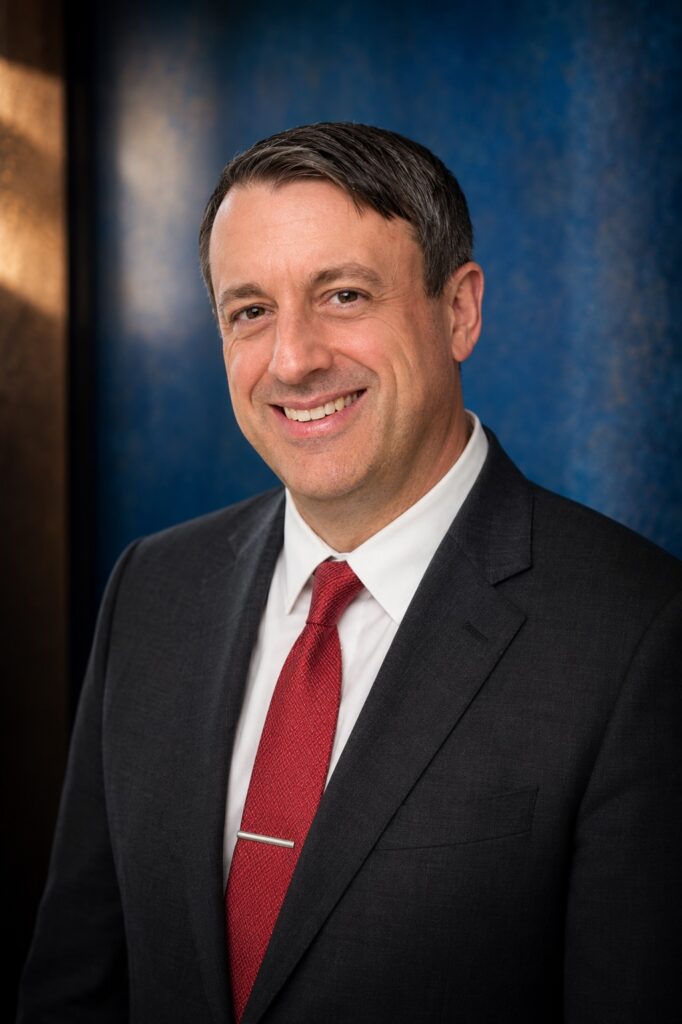
Jeffrey M. Schwab is Senior Counsel and Director of Litigation at the Liberty Justice Center, where he leads precedent-setting litigation in federal and state courts nationwide. Since joining the Liberty Justice Center in 2014, Jeff has focused on enforcing constitutional limits on government power—particularly in cases involving free speech, economic liberty, and the rights of ordinary Americans and small businesses.
Jeff has played a key role in some of the Liberty Justice Center’s most high-profile cases.
He currently serves as lead counsel in V.O.S. Selections v. Trump, a major separation-of-powers case that challenges the President’s claimed authority to impose sweeping “Liberation Day” tariffs under the International Emergency Economic Powers Act (IEEPA). Brought on behalf of five small businesses harmed by the tariffs, the case raises foundational questions about whether a president may effectively set tariff policy without Congress. The case is currently before the United States Supreme Court.
He served as counsel for Mark Janus in Janus v. AFSCME, the landmark case in which the United States Supreme Court found that public employees could not be compelled to pay money to a union without their consent. Since that victory, Jeff has continued to litigate cases protecting workers’ First Amendment rights and holding unions and government employers accountable when they collect or retain money without valid consent
Jeff also served as counsel in BASED Politics, Inc. v. Garland before the United States Supreme Court, a challenge to the federal government’s ban on the app TikTok.
A resident of Chicago, Jeff has led numerous challenges to unconstitutional Illinois laws. In Collazo v. Illinois State Board of Elections, he secured a victory against a law that attempted to change ballot-access rules in the middle of an active election cycle. And in Chancey v. Illinois State Board of Elections, he obtained a permanent injunction against Illinois Election Code provisions that unconstitutionally restricted donations to judicial candidates and independent expenditure committees.
Jeff’s litigation portfolio also includes cases challenging restrictions on ride-share vehicles and home-sharing hosts, the implementation of a tax on Internet streaming services such as Netflix and Spotify on Chicago residents, and which courts people who seek to vindicate their constitutional rights against the state can file.
Prior to joining the Liberty Justice Center, Jeff practiced at a boutique firm in Chicago, where he litigated religious liberty cases under the First Amendment and the Religious Land Use and Institutionalized Persons Act (RLUIPA).
Jeff received his B.S. in Business Management from Grove City College and his J.D. from the University of Michigan Law School.
Jeff has appeared in numerous national media outlets to discuss his cases and the protection of civil liberties. He is admitted to practice in Illinois and has practiced in numerous federal courts, including the U.S. Supreme Court, the Court of International Trade, and numerous federal district and circuit courts.
Jeffrey M. Schwab is Senior Counsel and Director of Litigation at the Liberty Justice Center, where he leads precedent-setting litigation in federal and state courts nationwide. Since joining the Liberty Justice Center in 2014, Jeff has focused on enforcing constitutional limits on government power—particularly in cases involving free speech, economic liberty, and the rights of ordinary Americans and small businesses.
Jeff has played a key role in some of the Liberty Justice Center’s most high-profile cases.
He currently serves as lead counsel in V.O.S. Selections v. Trump, a major separation-of-powers case that challenges the President’s claimed authority to impose sweeping “Liberation Day” tariffs under the International Emergency Economic Powers Act (IEEPA). Brought on behalf of five small businesses harmed by the tariffs, the case raises foundational questions about whether a president may effectively set tariff policy without Congress. The case is currently before the United States Supreme Court.
He served as counsel for Mark Janus in Janus v. AFSCME, the landmark case in which the United States Supreme Court found that public employees could not be compelled to pay money to a union without their consent. Since that victory, Jeff has continued to litigate cases protecting workers’ First Amendment rights and holding unions and government employers accountable when they collect or retain money without valid consent
Jeff also served as counsel in BASED Politics, Inc. v. Garland before the United States Supreme Court, a challenge to the federal government’s ban on the app TikTok.
A resident of Chicago, Jeff has led numerous challenges to unconstitutional Illinois laws. In Collazo v. Illinois State Board of Elections, he secured a victory against a law that attempted to change ballot-access rules in the middle of an active election cycle. And in Chancey v. Illinois State Board of Elections, he obtained a permanent injunction against Illinois Election Code provisions that unconstitutionally restricted donations to judicial candidates and independent expenditure committees.
Jeff’s litigation portfolio also includes cases challenging restrictions on ride-share vehicles and home-sharing hosts, the implementation of a tax on Internet streaming services such as Netflix and Spotify on Chicago residents, and which courts people who seek to vindicate their constitutional rights against the state can file.
Prior to joining the Liberty Justice Center, Jeff practiced at a boutique firm in Chicago, where he litigated religious liberty cases under the First Amendment and the Religious Land Use and Institutionalized Persons Act (RLUIPA).
Jeff received his B.S. in Business Management from Grove City College and his J.D. from the University of Michigan Law School.
Jeff has appeared in numerous national media outlets to discuss his cases and the protection of civil liberties. He is admitted to practice in Illinois and has practiced in numerous federal courts, including the U.S. Supreme Court, the Court of International Trade, and numerous federal district and circuit courts.